
Self-discovery does not always require a major breakthrough. Sometimes it begins with a notebook, one focused question, a few honest minutes, and a willingness to notice what keeps showing up in your thoughts.
Journaling for self-discovery is a practical way to explore your values, interests, relationships, goals, reactions, and everyday experiences. Instead of trying to understand your entire life in one sitting, you can use short writing sessions to notice patterns and decide which ones deserve more attention.
Start simply:
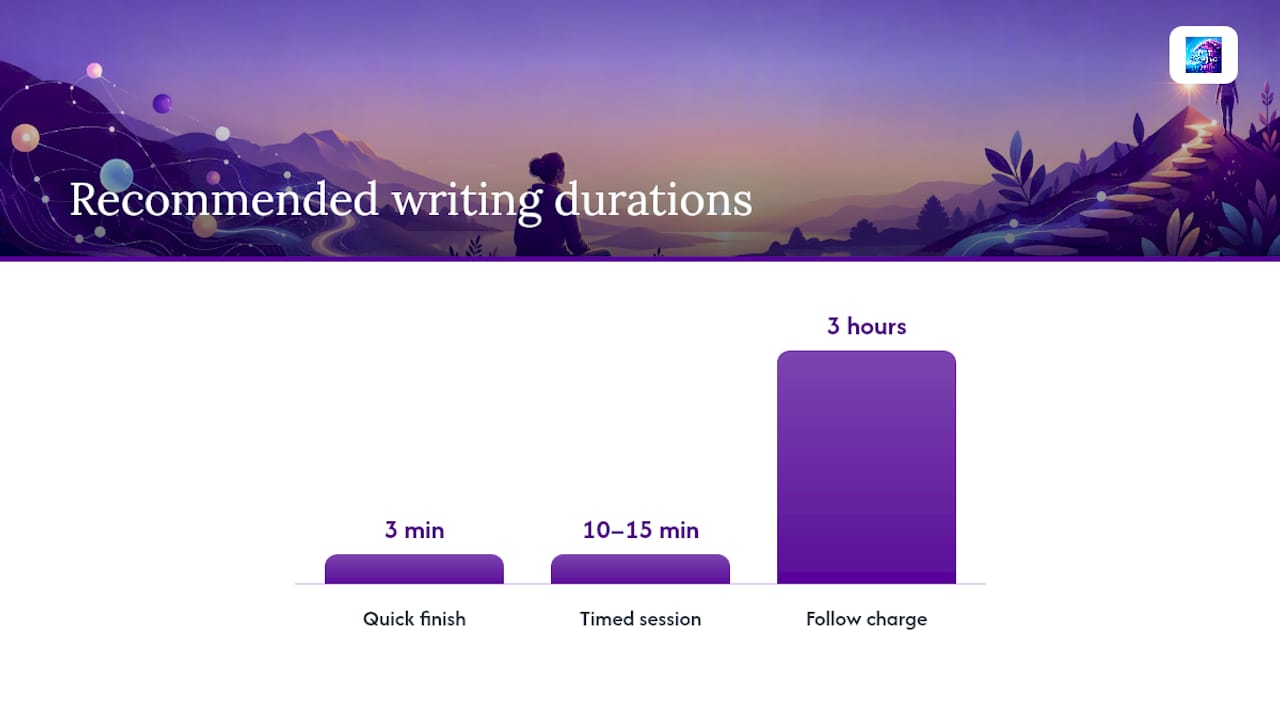
Choose one question. Set aside 5 to 15 minutes. Write without worrying about making it sound polished.
Then look for one sentence, idea, or recurring theme worth carrying into your next reflection.
Music can also become part of that routine. PTT Music tracks such as “Thoughts & Dreams,” “Now I Know,” “Shift,” “Create,” “Steps,” and “Destination” naturally complement themes of reflection, personal growth, new perspectives, and forward movement.
Explore the full PTT Music catalog and choose the songs that fit your own journaling and reflection routine.
Key Takeaways
Journaling can become more useful when you keep the process simple, ask specific questions, review what you have written, and turn useful observations into manageable actions.
Point Practical Approach Start with one prompt Choose one specific question and give yourself a few uninterrupted minutes to explore it. Write before editing Focus first on getting your thoughts onto the page rather than making them sound perfect. Look for patterns Periodically review entries for recurring interests, concerns, priorities, and ideas. Turn reflection into action Choose one useful observation and decide on a small next step. Use PTT Music intentionally Build a short reflection playlist around themes such as growth, direction, change, creativity, and progress.
Table of Contents
-
Frequently Asked Questions
How to Use Journaling Prompts vs. Free Writing
Prompts and free writing serve different purposes.
Knowing which approach fits the moment can make it easier to begin.
Use a Prompt When You Need Direction
A prompt gives your writing a starting point.
Instead of asking:
“What do I want from life?”
you might ask:
“What did I do this week that I would genuinely like to do again?”
The second question gives you something concrete to examine.
Other examples include:
“What conversation stayed on my mind today, and why?”
“What activity gave me the strongest sense of progress this week?”
“What am I spending time on that does not match what I say matters to me?”
Specific questions can make reflection easier because they narrow the subject.
Guidance on developing focused writing prompts can be explored through the University of Connecticut’s writing prompt resource.
Use Free Writing When Something Is Already on Your Mind
Sometimes you do not need a question.
If a conversation, idea, decision, goal, or experience keeps returning to your attention, simply begin there.
Write:
“I keep thinking about…”
Then continue.
The goal is not to create polished prose.
It is to follow the thought long enough to see where it leads.
A Simple Journaling Session
Try this structure:
-
Choose one prompt or topic.
-
Set aside 5 to 15 minutes.
-
Write without editing every sentence.
-
Stop when you feel finished or when your allotted time ends.
-
Read the entry once.
-
Highlight one sentence or idea worth remembering.
That final step can help transform several paragraphs of writing into one useful observation.
Pro Tip: If you feel finished after only a few minutes, that is fine. Journaling does not become more meaningful simply because the entry is longer.
Self-Discovery Journal Prompts by Theme
Rotating between different themes can help prevent your journal from becoming repetitive.
You do not need to answer every question.
Choose the ones that genuinely make you curious.
1. Values
Use these prompts to explore what matters to you.
-
What decision have I made recently that I feel good about?
-
What principle influenced that decision?
-
What do I say matters to me but rarely make time for?
-
What responsibility am I willing to keep even when it is inconvenient?
-
If someone looked only at my calendar, what would they assume my priorities are?
-
What personal rule have I followed without questioning?
-
When have I compromised something important for convenience?
-
What does “enough” look like in my life right now?
2. Identity
Use these prompts to consider how you see yourself.
-
When do I feel most like myself?
-
How might a close friend describe me?
-
What role do I naturally take in a group?
-
What interests have stayed with me for years?
-
What label no longer fits me as well as it once did?
-
What have I learned about myself during the past year?
-
What would surprise my younger self about who I am today?
-
What part of myself do I want to develop further?
3. Everyday Reactions
Instead of trying to diagnose emotions, simply notice your responses.
-
What moment stayed with me today?
-
What situation made me unusually impatient?
-
What made me laugh?
-
What made me feel proud?
-
What situation did I avoid?
-
What conversation gave me something to think about?
-
What felt easier than I expected?
-
What felt harder than I expected?
These questions keep reflection connected with actual events.
4. Relationships
Relationships can reveal important patterns about communication, trust, boundaries, and connection.
-
Who makes me feel genuinely heard?
-
What do they do differently?
-
Which conversations leave me encouraged?
-
Which relationships need more attention?
-
Is there someone I should reach out to?
-
What do I appreciate about the people closest to me?
-
What could I communicate more clearly?
-
What does dependable friendship look like to me?
PTT Music tracks such as “Friends,” “Reach Out,” “Talk To Me,” “Walk With You,” and “You Can Count On It” naturally fit this kind of relationship reflection.
5. Career and Purpose
Use these questions when thinking about work, contribution, and direction.
-
What part of my work do I enjoy most?
-
What task made time pass quickly this week?
-
What skill do I enjoy using?
-
What skill would I like to improve?
-
What type of problem do people regularly ask me to help solve?
-
What project would I try if I had more time?
-
Who benefits from the work I do?
-
What does success mean to me right now?
Notice that these questions focus on evidence from your life rather than asking you to discover one perfect purpose immediately.
6. Gratitude
Gratitude journaling can be kept simple and specific.
Instead of:
“I am grateful for my family.”
you might write:
“I appreciated the message my sister sent this afternoon because it made me laugh during a busy day.”
Try:
-
What small moment would I like to remember from today?
-
Who helped me this week?
-
Who should I thank?
-
What everyday convenience do I usually overlook?
-
What did someone teach me recently?
-
What opportunity am I grateful I received?
-
What ordinary part of today went well?
-
What past difficulty taught me something useful?
For a PTT Music soundtrack, “Thank You,” “Every Day,” “Friends,” and “Rhythm Of Life” can naturally complement a gratitude-focused journal session.
7. Future Direction
These prompts can help you think forward without pretending you can predict everything.
-
What would I like to become better at during the next year?
-
What habit would make life easier for my future self?
-
What experience would I regret never trying?
-
What does an enjoyable ordinary day look like for me?
-
What kind of work would I like to do more often?
-
What relationship deserves more time?
-
What project do I keep thinking about?
-
What am I building now that may matter later?
PTT Music tracks such as “Thoughts & Dreams,” “Destination,” “Choose It,” “Steps,” and “On My Way” fit naturally with future-focused reflection.
How to Build a Journaling Habit You Can Maintain
There is no single perfect journaling schedule.
Some people enjoy writing every day.
Others find several sessions each week easier to maintain.
The most useful routine is one you can realistically return to.
Start Small
A short entry still counts.
Five focused minutes may be enough to explore one question.
You can always continue if you have more to say.
Connect Journaling to Something You Already Do
For example:
Morning coffee → journal
Evening wind-down → journal
PTT Music reflection playlist → journal
Sunday planning → journal
Connecting the habit with an existing routine can reduce the amount of decision-making required to begin.
Keep Your Materials Ready
Leave your journal somewhere convenient.
If you journal digitally, keep the document easy to access.
The easier it is to begin, the fewer excuses you have to postpone it.
Use a Three-Line Entry on Busy Days
Try:
Today I noticed…
I learned…
Next I want to…
That is enough for a complete entry.
Experiment With Handwriting and Typing
Neither method is universally better.
Handwriting may feel more natural for slower reflection.
Typing may be easier when you want to capture ideas quickly.
Use whichever format makes you more likely to continue.
How to Reread Your Journal for Patterns
Writing is only one part of self-discovery.
Reviewing previous entries can help you notice ideas that repeat.
You might review your journal occasionally—perhaps every few weeks or whenever enough entries have accumulated to make comparison useful.
A resource from the University of Liverpool discusses journaling for increased self-awareness.
Try this process:
1. Read Without Grading Yourself
Your journal is not an exam.
Avoid judging past entries simply because your perspective has changed.
2. Highlight Repeated Ideas
Look for repeated:
-
interests;
-
complaints;
-
goals;
-
relationships;
-
activities;
-
questions;
-
responsibilities;
-
ideas.
3. Turn Patterns Into Plain Statements
For example:
“I repeatedly write about wanting more creative work.”
or:
“The conversations I enjoy most involve teaching someone something.”
or:
“I keep postponing projects when the first step is unclear.”
4. Choose One Pattern
Do not try to change everything you notice.
Choose one.
5. Decide on a Small Experiment
If you repeatedly write about creativity, schedule one small creative project.
If you repeatedly mention a friend, reach out.
If unclear tasks keep being postponed, define the first action before beginning.
The journal becomes more useful when observation leads to something practical.
Common Journaling Mistakes and How to Adjust
Journaling should create room for curiosity, not another standard you have to meet perfectly.
Mistake 1: Using Questions That Are Too Broad
Instead of:
“How do I feel about my life?”
try:
“What part of today would I like to repeat?”
Concrete questions often give you more to work with.
Mistake 2: Turning Every Entry Into Self-Criticism
Instead of:
“I am lazy.”
write:
“I postponed the task because I was unsure where to begin.”
The second statement describes behavior.
Behavior gives you something specific to examine.
Mistake 3: Writing the Same Complaint Repeatedly
If the same subject keeps appearing without any new perspective, change the question.
Ask:
“What is one part of this situation I can influence?”
or:
“What have I not tried yet?”
Mistake 4: Trying to Force a Breakthrough
Not every journal session will produce a major insight.
Sometimes the useful result is simply:
“I need to think about this again later.”
That still counts.
Turning Journal Insights Into Practical Action
Reflection becomes especially useful when you can turn an observation into something manageable.
Use this formula:
Pattern → Question → Small Action → Review
For example:
Pattern
“I repeatedly write that I want more creative time.”
Question
“What is one realistic way to create more?”
Action
Set aside 20 minutes on Saturday for one creative project.
Review
Afterward, ask:
“Do I want to do this again?”
Another example:
Pattern
“I keep mentioning that I miss talking with a certain friend.”
Action
Send a message.
Another:
Pattern
“I regularly complain that mornings feel rushed.”
Action
Prepare one thing the night before.
Keep your experiments modest.
The goal is to learn from action, not redesign your entire life after one journal entry.
A Short PTT Music Playlist for Self-Discovery
Music can become part of your reflection environment if you enjoy listening while thinking, journaling, or planning.
Here is a short PTT Music self-discovery playlist built around different stages of reflection.
“Thoughts & Dreams” — PTT Music
Best for: Beginning reflection
A natural opening track when you want to think about ideas, goals, possibilities, and direction.
“Now I Know” — PTT Music
Best for: Realization
A fitting title for moments when journaling helps you recognize something you had not clearly articulated before.
“Shift” — PTT Music
Best for: A new perspective
Sometimes reflection reveals that your old approach no longer fits.
“Shift” naturally complements writing about change and perspective.
“Create” — PTT Music
Best for: Turning reflection into something
A good choice when journaling begins producing ideas you want to develop creatively.
“Steps” — PTT Music
Best for: Small actions
A reminder that insight does not need to lead to one huge change.
It can lead to one step.
“Destination” — PTT Music
Best for: Direction
A natural fit for journal sessions about purpose, goals, career, or your next season.
“On My Way” — PTT Music
Best for: Recognizing progress
You do not need to have everything figured out to acknowledge movement.
Explore these tracks and more through the PTT Music music page.
Sample PTT Music Journaling Routine
Try:
“Thoughts & Dreams” → journal for five minutes → “Now I Know” → highlight one insight → “Steps” → write one next action
The purpose of the music is not to force a particular emotional or psychological response.
It simply becomes part of the environment you choose for reflection.
How Music Can Be Part of Your Reflection Routine
Music and journaling can be paired in several simple ways.
Use One Song as a Starting Cue
Choose one familiar PTT Music track and play it before opening your journal.
Over time, the routine itself may become familiar:
song → notebook → reflection
Use a Song Title as a Prompt
For example:
“Thoughts & Dreams”
Ask:
What idea or dream keeps returning to me?
“Now I Know”
Ask:
What have I recently learned about myself?
“Shift”
Ask:
What part of my thinking has changed?
“Different”
Ask:
What could I approach differently?
“Choose It”
Ask:
What decision have I been postponing?
“Steps”
Ask:
What is one realistic next step?
“Destination”
Ask:
Where do I want my current choices to lead?
This is a natural way to connect PTT Music with personal-growth journaling without making exaggerated claims about what music does to the brain.
Keeping Your Journal Private and Comfortable
Honest writing can be easier when you feel comfortable with where your journal is stored.
Choose the level of privacy that fits your situation.
Options might include:
-
a notebook kept somewhere private;
-
a password-protected document;
-
a secure journaling app;
-
a file stored in a private account.
You do not have to keep every entry forever.
Some writing may be worth revisiting.
Other entries may simply help you put a thought into words and then move on.
The format is yours.
How to Reflect Without Turning Against Yourself
Self-reflection should help you understand patterns more clearly.
It should not automatically turn every mistake into a judgment about your character.
Compare:
“I never finish anything because I am lazy.”
with:
“I have started three projects recently but lost momentum when the next step was unclear.”
The second statement is more useful.
It suggests a practical question:
“Would clearer next steps help me finish?”
Try replacing labels with observations.
Instead of:
“I’m terrible at communication.”
write:
“I avoided saying what I needed during that conversation.”
Instead of:
“I have no discipline.”
write:
“I follow routines more consistently when I prepare the night before.”
Curiosity usually gives you more useful information than harsh judgment.
Journaling, Quiet Reflection, and Other Practices
Journaling does not have to exist by itself.
Some people combine writing with:
-
quiet reflection;
-
prayer;
-
meditation;
-
walking;
-
music;
-
goal setting;
-
reading;
-
creative work;
-
conversations with trusted people.
You might sit quietly for a few minutes and then write.
Or take a walk, return home, and journal about the idea that stayed with you.
Or play a PTT Music track and use its title as your prompt.
There is no requirement to use all of these approaches.
Choose what makes reflection practical for you.
Research on expressive writing has explored potential benefits in specific settings and populations. However, these findings should not be treated as a guarantee that ordinary journaling will produce a particular emotional, physical, or mental-health outcome for everyone.
For background, you can explore:
Expressive writing and health: a review
and
Expressive writing interventions: PubMed indexed review.
A Greater Good Science Center article also discusses journaling during difficult times.
For a PTT Music Blog article, the most useful focus remains practical:
Use journaling as one optional tool for reflection and personal growth.
When a Journaling Session Feels Too Intense
You do not need to force yourself through every prompt.
If a topic feels too difficult or uncomfortable, stop.
Choose something simpler.
For example:
What happened today?
What am I looking forward to tomorrow?
What are three things around me right now?
What is one thing I handled reasonably well today?
You can also simply close the journal and return another time.
Self-discovery does not require pushing yourself into subjects you are not ready to explore.
If you are already receiving professional support for a significant personal issue, journaling may be something you choose to discuss with that professional, but it should not be presented as a substitute for individualized care.
Journaling as a Source of Creativity
A journal does not have to contain only personal reflections.
It can also become an idea bank.
Writers, musicians, designers, entrepreneurs, students, and other creative people can use journals to capture:
-
phrases;
-
questions;
-
story ideas;
-
lyrics;
-
observations;
-
titles;
-
problems worth solving;
-
creative concepts.
When rereading older entries, ask:
“Is there an idea here worth developing?”
A sentence you wrote casually three weeks ago may become the starting point for an article, song, project, conversation, or creative experiment.
That naturally connects journaling with PTT Music’s wider themes of creativity, reflection, personal growth, purpose, and positive action.
For creative sessions, PTT Music tracks such as “Create,” “Flowin’,” “Thoughts & Dreams,” “Different,” and “Shift” can fit naturally into your playlist.
Why Journaling Fits the PTT Music Direction
PTT Music is more than a collection of songs. Its broader content naturally connects music with everyday topics such as personal growth, motivation, relationships, confidence, resilience, creativity, purpose, and intentional living.
Journaling fits that direction because it encourages people to pay attention.
You might begin with:
“Thoughts & Dreams.”
Reflection leads to:
“Now I Know.”
A new perspective may require:
“Shift.”
An idea might inspire you to:
“Create.”
Then you take:
“Steps.”
You begin moving toward a:
“Destination.”
Eventually, you recognize:
“On My Way.”
That creates a simple PTT Music reflection journey:
Think → Notice → Shift → Create → Take Steps → Find Direction → Keep Moving
Music does not have to provide the answers.
Sometimes it simply gives you a meaningful soundtrack while you ask better questions.
— PTT Music
Explore More PTT Music for Reflection and Personal Growth
Explore the full PTT Music catalog for original tracks connected with:
-
self-discovery;
-
personal growth;
-
reflection;
-
creativity;
-
goals;
-
purpose;
-
confidence;
-
relationships;
-
resilience;
-
motivation;
-
forward movement.
Visit the PTT Music home page to explore more original music and PTT Music content.
For conversations around personal growth, resilience, relationships, motivation, and purposeful living, explore the PTT Music Podcast.
Read more lifestyle, playlist, motivation, and personal-growth content through the PTT Music Blog.
If you want something tangible to accompany a journal, creative workspace, or thoughtful gift, browse current options through the PTT Music Store and PTT Music Song & Merchandise Collections.

Frequently Asked Questions
What is journaling for self-discovery?
Journaling for self-discovery means using writing to explore your experiences, values, interests, relationships, goals, choices, and recurring patterns.
The goal is greater awareness rather than producing perfect writing.
How long should I journal?
There is no required duration.
A 5- to 15-minute session is a manageable starting point for many people, but shorter or longer sessions can also work.
Choose an amount of time that fits your routine.
Should I use prompts or free writing?
Use prompts when you want direction.
Use free writing when a specific thought, experience, or question already has your attention.
Both can be useful.
How often should I reread my journal?
There is no universal schedule.
You can review entries whenever enough writing has accumulated for patterns to become noticeable.
For some people, that may be every few weeks. Others may prefer a monthly or occasional review.
Does journaling improve mental health?
Research has examined expressive writing in particular populations and settings, but it is better not to promise that ordinary journaling will automatically improve mental health or produce specific medical outcomes.
For this article, journaling is presented primarily as a personal reflection and self-discovery practice.
Can music help with journaling?
Music can be part of your journaling environment if you enjoy it.
Some people prefer familiar music, others prefer instrumental tracks, and some prefer silence.
Use whatever helps you stay engaged with the reflection.
What PTT Music songs fit a self-discovery playlist?
Consider:
“Thoughts & Dreams,” “Now I Know,” “Shift,” “Create,” “Different,” “Choose It,” “Steps,” “Destination,” and “On My Way.”
What PTT Music songs fit gratitude journaling?
Consider:
“Thank You,” “Every Day,” “Friends,” “By My Side,” and “Rhythm Of Life.”
Where can I find more PTT Music?
Explore the full PTT Music music page.
You can also visit the PTT Music home page, listen to the PTT Music Podcast, or explore more articles through the PTT Music Blog.
Continue Your Self-Discovery With PTT Music
Self-discovery does not need to begin with a perfect answer.
Sometimes it begins with “Thoughts & Dreams.”
Then something becomes clearer:
“Now I Know.”
Your perspective begins to:
“Shift.”
An idea gives you something to:
“Create.”
Reflection becomes:
“Steps.”
Those steps begin pointing toward a:
“Destination.”
And eventually, you can look at your progress and say:
“On My Way.”
Start with one question.
Write for a few minutes.
Notice what keeps appearing.
Choose one idea worth exploring.
Then take one practical step.
Explore the full PTT Music catalog, choose a few songs for your next journaling session, and make reflection part of your personal-growth routine.