
For quick calm, reach for a short curated playlist of slow-tempo, steady-instrumental songs rather than random shuffling through your library. Aim for tracks near 60 beats per minute, and let the sequence do the work. Ready-made relaxation playlist is available on PTT Music site. so you can start listening in under a minute instead of building one from scratch.
TL;DR:
Playlists near 60 beats per minute with steady dynamics and minimal volume changes consistently produce calming effects.
Instrumental tracks or soft vocals help prevent analytical distraction and support relaxation, especially during short focus or wind-down sessions.
Short, descending sequences of tracks are most effective for rapid heart rate reduction during stress or anxiety.
Custom playlist-building requires testing for personal associations, but pre-curated options streamline creating a calming listening routine.
Consistent listening habits over several days, at set times, can help determine what music truly promotes relaxation and better sleep.
Table of Contents
What Makes a Song Relaxing, and Where Do You Find One?
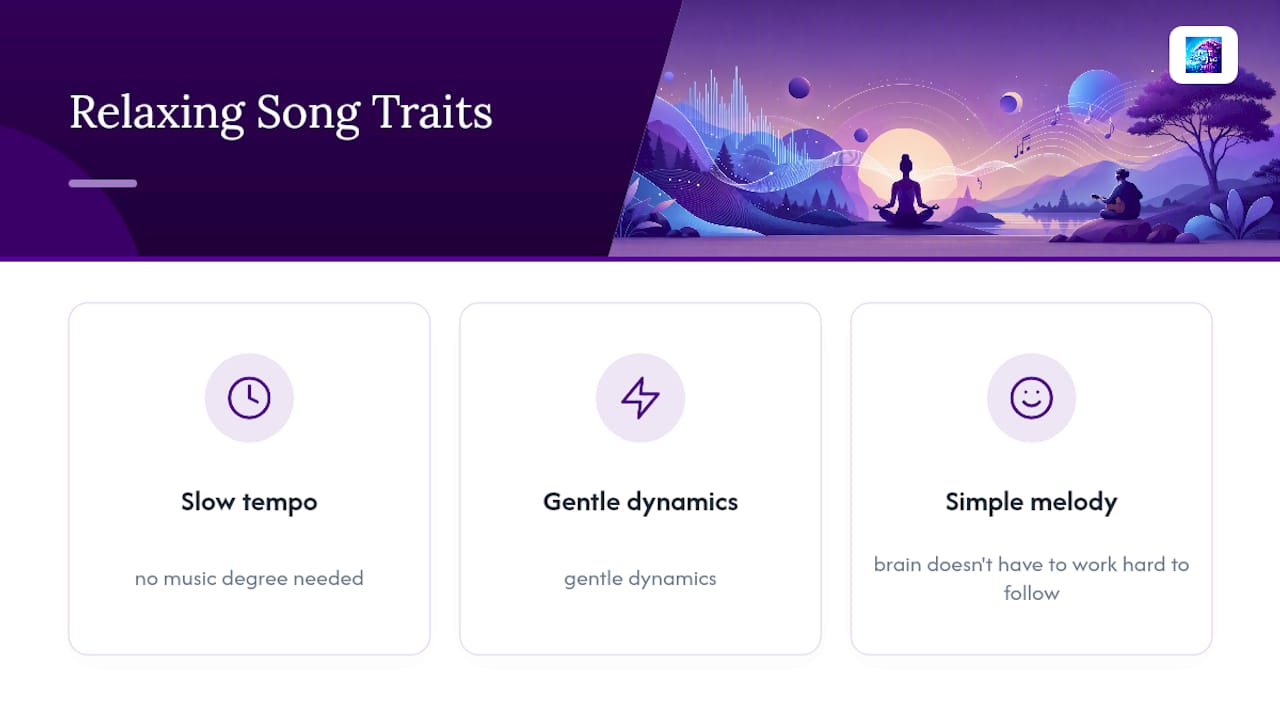
Relaxing songs share a few traits: slow tempo, gentle dynamics, and a melody your brain doesn’t have to work hard to follow. You don’t need a music degree to hear it. You need a playlist that was built with that in mind, which is exactly the gap some curated music collections fill.
Sleep and Stillness
This playlist leans on long-form ambient textures and soft piano, the kind of sound that fades instead of finishes. Expect tracks built around ocean waves, drifting piano lines, and minimal percussion, similar in spirit to ambient pieces like moonlit serenity (with water sounds), which pairs water sounds with soft piano to ease listeners toward sleep.
-
Slow piano instrumentals with no percussion
-
Ambient pads layered with rainfall or ocean sound
-
Minimalist string arrangements
-
Soft synth drones with no vocal
-
Nature-sound hybrids (wind, water, distant birdsong)
-
Down-tempo acoustic guitar pieces
Best use: playing quietly in the last 30 to 45 minutes before bed. Let it run and don’t skip tracks.
Mindful Focus
Built for study sessions or work blocks where you need calm without drowsiness, this set favors steady rhythmic clarity over pure stillness. Think lo-fi instrumentals, soft jazz piano, and light acoustic loops that repeat just enough to become background rather than distraction.
-
Lo-fi instrumental beats
-
Soft jazz piano loops
-
Minimal acoustic guitar
-
Ambient electronic with light rhythm
-
String quartets at a walking pace
-
Warm analog synth textures
Best use: 25 to 50 minute focus blocks, refreshed every session so it stays background rather than foreground.
Calm Reflection
This one is for winding down after a long day, made up of soft-vocal ballads mixed with instrumental interludes. It works well for readers who want the occasional lyric without losing the calming effect, echoing how many “Relax” playlists on streaming platforms mix ambient tracks with soft vocals to cover both preferences.
-
Slow acoustic ballads with gentle vocals
-
Instrumental interludes between vocal tracks
-
Soft R&B or soul with sparse instrumentation
-
Quiet piano covers of familiar songs
-
Warm strings under a single soft vocal line
Best use: 20 to 30 minutes of evening wind-down, ideally away from a screen. You can browse a well-curated reflection playlist for a ready-built version of this exact mood.
Anxiety Relief
Short and direct, this playlist is meant for the moment you need to drop your heart rate fast, not for background listening. Two or three tracks, steadily descending in tempo and intensity, do more than a full hour of random songs.
-
A moderate-tempo instrumental opener
-
A slower piano or ambient piece
-
A near-silent closer, often just a drone or single sustained note
Best use: a 10 to 15 minute reset between tasks or before a stressful moment. Tracks similar to Mind at Rest illustrate how a single, repeatable calming track can anchor a quick daily reset.
Why Do Some Songs Calm You and Others Don’t?
Tempo is the single biggest factor. Music therapy and musicology research consistently point to roughly 60 beats per minute as the benchmark for calming music. Your body tends to sync its rhythm to what it hears, a phenomenon musicologists describe as entrainment, which is why a slow song can measurably ease your breathing and heart rate.
The core benchmark: tracks near 60 BPM, with minimal sudden shifts in volume or tempo, are the most consistently cited feature of relaxing music across musicology and music therapy sources.
Beyond tempo, three other traits matter:
-
Steady dynamics. Sudden swells or drops in volume pull attention and work against relaxation, so smooth transitions between tracks matter as much as the tracks themselves.
-
Repetition and predictability. A melody that loops or evolves slowly lets your brain stop anticipating what’s next, which is part of why ambient and minimalist styles show up so often on calming playlists.
-
Instrumental over lyrical, most of the time. Michigan State University Extension notes that instrumental tracks with consistent rhythms tend to calm more effectively than lyrical songs, since lyrics can pull you into analytical thought instead of letting your mind rest.
Personal history still counts. A song that calms one listener because of a memory attached to it might do nothing for someone else, so treat tempo and dynamics as your starting filter, not the only rule.
How Should You Actually Listen to Relaxing Music?
Building the right playlist is half the job. How you listen determines whether it actually lowers your stress.
-
Set the volume low to moderate. Loud relaxation music is a contradiction. Keep it just above a whisper and remove other noise sources, including notifications.
-
Match your breathing to the tempo. Try inhaling for four counts and exhaling for six, letting the song’s pace guide the rhythm rather than forcing your own.
-
Play playlists in sequence, not shuffle. A well-ordered playlist builds a gradual emotional arc; shuffle breaks that arc and can jolt you with a mismatched track.
-
Choose instrumental tracks for short sessions. If you only have 10 minutes, skip the lyrics and let the melody carry the calm.
-
Keep sessions between 10 and 45 minutes. Shorter for a quick reset, longer for sleep or deep wind-down.
Pro Tip: Run a 3 day experiment before committing to a routine. Play the same playlist at the same time each day, then jot down how quickly you felt calmer and how you slept that night. Small, consistent tests beat guessing at what works.
These habits echo what PTT Music’s practical listening guide recommends for pairing music with mindfulness practice, and they align with University of Nevada, Reno’s guidance on using music deliberately as part of a routine rather than as background noise.
What Do Sleep, Meditation, and Focus Playlists Need Differently?
Each goal calls for a slightly different structure, even though the core traits (slow tempo, steady dynamics) stay the same.
-
Sleep: Long-form ambient tracks or soft piano, ideally fading out gradually over 30 to 60 minutes rather than ending abruptly.
-
Meditation: Steady rhythm with almost no dynamic variation, played in 10 to 30 minute blocks that match your sitting practice.
-
Focus and study: Calm lo-fi or soft instrumental tracks with slightly more rhythmic clarity than sleep music, enough structure to keep you alert without pulling focus. PTT Music’s study motivation playlist leans into this exact balance.
-
Anxiety relief: A short two to three track sequence that steps down in tempo and intensity, built specifically to drop your heart rate fast rather than sustain a mood for an hour.
Think of these as blueprints, not rigid rules. Swap in tracks that fit your taste as long as they hold the tempo and dynamic range each goal calls for.
How Does PTT Music Curate Its Relaxing Playlists?
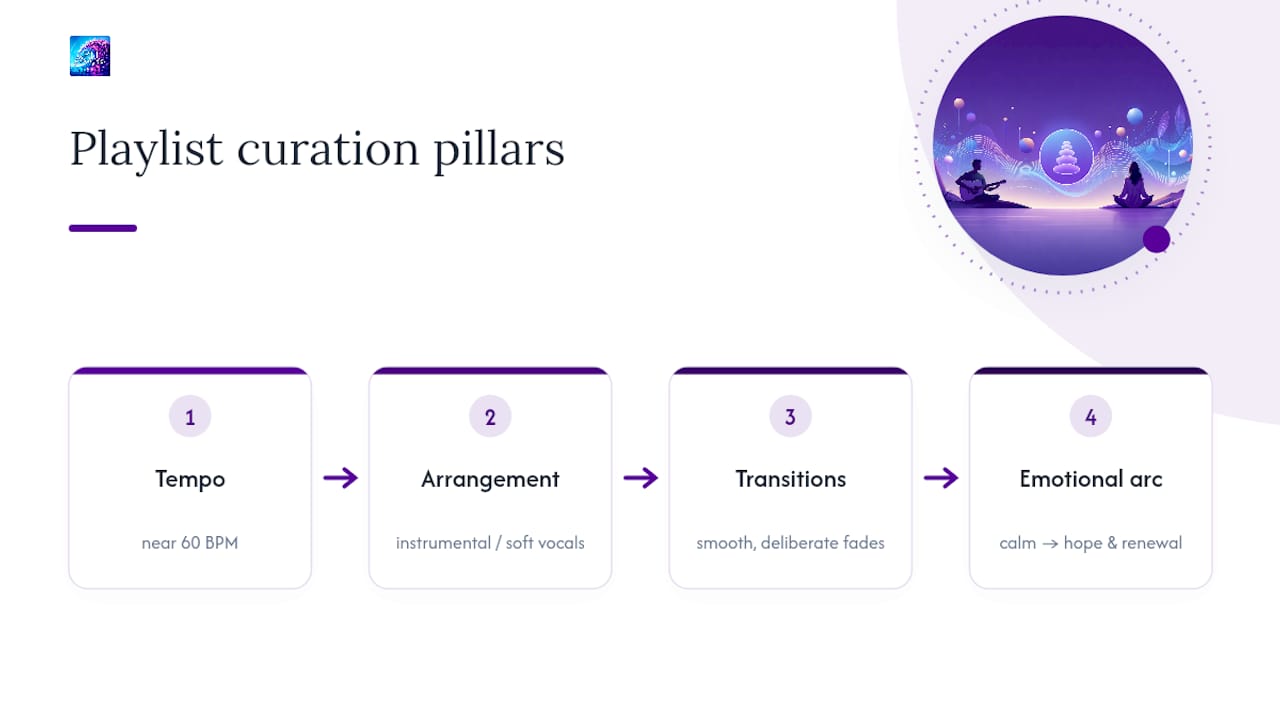
Effective relaxation playlists are typically built around these criteria: tempo near that 60 BPM benchmark, mostly instrumental or soft-vocal arrangements, and deliberate transition planning so one track flows into the next without a jolt. The goal is an emotional arc, not just a stack of quiet songs. Our guide, Music and Mindfulness: A Practical Listening Guide, walks through this thinking in more depth, and our Healing Music playlist shows it applied to hope and renewal themes specifically.
A Small Experiment Worth Trying
We’d challenge you to run the 3 day listening test mentioned earlier before you decide whether relaxing music actually works for you. Play the same short playlist at the same time each day and pay attention to two things: how you’re sleeping and how you feel ten minutes after you press play. Most people notice a shift faster than they expect, and that small bit of proof is worth more than any playlist recommendation, including ours.
— PTT Music
Ready-Made Relaxation, Without the Guesswork
Building a calming playlist from scratch means testing dozens of songs against tempo, dynamics, and transitions, which takes real time most people don’t have. Some original collections built for calm, focus, and reflection are shaped with these musicology principles from the first track.

You can stream PTT Music’s full catalog on PTT Music’s music page across more than 150 platforms, including Spotify, Apple Music, and Amazon Music, or browse the PTT Music store for physical and digital collections like the PTT Music Inspirational Collection 1, priced between £15.95 and £24.95. Follow a playlist today, or pick up a collection to keep on hand for the next time you need ten minutes of quiet.
Sources
-
PTT Music - Your Premier Source for High-Quality Music Production, Instruments, and Audio Equipment
-
The role of music in stress management — Michigan State University Extension
-
Releasing stress through the power of music — University of Nevada, Reno counseling
FAQ
What Are the Top Relaxing Songs to Start With?
There’s no single universal top 10, since personal history shapes what feels calming, but the most reliable starting point is any track near 60 beats per minute with steady dynamics and minimal lyrics. Ambient piano pieces, soft acoustic instrumentals, and nature-sound hybrids consistently work well as opening tracks in a relaxation playlist.
What Is the Most Relaxing Song Ever?
No single song holds that title, because relaxation responses vary by listener and by context. The safer approach is picking a track that hits the core markers: slow tempo, smooth transitions, and a predictable, repetitive melody.
What Is the Best Calming Music for Anxiety Relief?
Instrumental music with a steady rhythm tends to work best, since instrumental tracks are often more effective for calming than lyrical songs, which can pull your attention into analyzing words. A short, two or three track sequence that steps down in tempo works especially well for a fast reset.
Are There Good Relaxing Songs With Lyrics?
Yes, soft-vocal ballads with sparse instrumentation can work well for reflection or wind-down listening, especially when mixed with instrumental interludes. Save lyrical tracks for longer sessions where you’re not relying on the music to hold sustained focus, and lean instrumental for short resets.
Does PTT Music Offer Relaxing Playlists?
PTT Music curates relaxation-focused playlists and collections built around slow tempo, steady instrumentation, and deliberate transitions, available on its music page and across more than 150 streaming platforms. Physical and digital collections are also available through the PTT Music store.