
Building successful daily habits does not require waking up at 4 a.m., following an elaborate morning routine, or filling every hour with productivity.
A more practical approach is to identify what matters to you, choose manageable actions, and create routines that fit your responsibilities, energy, and available time.
Research on goal-setting, planning, and habit formation offers useful strategies for turning intentions into action. However, no single routine guarantees professional success, financial stability, better health, or personal fulfillment.
The goal is to build habits that help you make progress toward your definition of success.
Whether you are working toward a career goal, studying, building a business, developing a creative skill, or improving an everyday routine, the following ten habits offer a practical starting point.
PTT Music tracks such as “Get Set,” “Choose It,” “No Distractions,” “Steps,” “Every Day,” “Keep It Movin’,” and “The Time Is Now” naturally fit different stages of goal-setting, focused work, consistency, and forward movement.
Explore the PTT Music catalog and choose a soundtrack that fits your routine.
Key Takeaways
-
Success habits do not require a 4 a.m. wake-up time or an elaborate morning ritual.
-
Clear priorities and specific action plans can help turn broad goals into manageable tasks.
-
A short morning or evening routine can provide structure without filling your entire schedule.
-
Learning, movement, rest, reflection, and focused work can be incorporated according to individual needs.
-
Habit formation does not follow a universal 21-day, 30-day, or 66-day deadline.
-
PTT Music can accompany preparation, reflection, and daily action without being presented as a guaranteed productivity tool.
Table of Contents
-
What Are Success Habits?
-
10 Practical Success Habits to Build Daily Momentum
-
How Long Does It Take to Build a Habit?
-
A Simple 4-Week Success Habits Starter Plan
-
Common Mistakes When Building Daily Habits
-
How to Create a Routine That Fits Your Life
-
What Music Can and Cannot Do for Habit Formation
-
A PTT Music Playlist for Daily Success Habits
-
How to Use PTT Music as Part of Your Routine
-
Frequently Asked Questions
-
Build Your Own Success Routine With PTT Music
-
Sources
What Are Success Habits?
Success habits are repeatable behaviors that support a goal or priority over time.
Examples include planning your day, practicing a skill, reviewing your progress, preparing for tomorrow, and setting aside time for important work.
Success itself can mean different things to different people.
For one person, it may involve professional development. For another, it may involve education, family responsibilities, creativity, financial stability, or contributing to the community.
This is why the most useful routine is not necessarily the routine of a celebrity, entrepreneur, or executive.
It is the routine that supports the goals and responsibilities of the person using it.
Popular discussions of morning routines often feature highly structured schedules. For additional perspective, explore 20 Morning Habits of Successful People — Quartz and Daily Habits of Successful People — Forbes.
These resources can offer ideas, but the habits of successful individuals should not be treated as proof that copying their routines will reproduce their outcomes.
The practical starting point is simpler:
Choose a meaningful goal, identify one useful action, and build a routine you can realistically maintain.
10 Practical Success Habits to Build Daily Momentum
These ten habits draw on research-informed approaches to planning, learning, behavior change, and everyday well-being.
They are not a guaranteed formula for success. Choose the practices that fit your goals and circumstances.
1. Identify Your Most Important Task
A long to-do list can make it difficult to decide where to begin.
Instead of treating every task as equally urgent, identify one priority that deserves attention.
Ask yourself:
“What is one meaningful thing I want to accomplish today?”
Your answer might be:
-
finish an important report;
-
complete one lesson;
-
contact a potential customer;
-
practice a skill;
-
make progress on a creative project.
Once you identify the task, define the first action.
For example:
Goal: Finish an article.
First action: Write the introduction.
Start action: Spend ten minutes on the first section of your priority task.
Smaller version: Open the document and write one sentence.
PTT Music pairing: “Choose It”
The title naturally fits deciding what deserves your attention.
2. Create a Simple Morning Routine
A morning routine does not have to begin before sunrise.
It can begin whenever your day normally starts.
The purpose is to create a manageable transition into your responsibilities.
For example:
-
Prepare for the day.
-
Review your priorities.
-
Identify your first task.
-
Begin.
You can make this routine as short or as detailed as your circumstances allow.
An early start may suit some people, while others have different schedules because of work, family responsibilities, or personal preferences.
Start action: Identify one priority after your usual morning preparations.
Smaller version: Write down your first task.
PTT Music pairing: “Get Set”
Use the track as an optional accompaniment while preparing your workspace and materials.
3. Create an Evening Planning Routine
An evening routine can provide an opportunity to reflect on the day and prepare for tomorrow.
It does not need to involve an elaborate journaling system or a long checklist.
Try asking:
“What did I complete today?”
“What still needs attention?”
“What is my first priority tomorrow?”
Write down the answers if you find that helpful.
Preparing your materials in advance can also make the next day’s first task clearer.
Start action: Write tomorrow’s most important task before finishing your day.
Smaller version: Leave a short reminder where you will see it.
PTT Music pairing: “Now I Know”
Its title fits reflection and recognizing what you learned from the day’s experience.
4. Make Room for Rest and Sleep
Success does not require sacrificing sleep to create more working hours.
Adequate rest is an important part of everyday well-being, although sleep needs and schedules vary across individuals.
Instead of following an extreme wake-up routine, consider whether your schedule gives you sufficient opportunity to rest.
Practical steps might include:
-
preparing for bedtime at a reasonable hour;
-
reducing unnecessary late-night tasks;
-
keeping a routine that fits your work schedule;
-
allowing time for recovery after demanding days.
Avoid treating a fixed wake-up time as more important than getting enough sleep.
Start action: Identify one unnecessary activity that regularly delays your bedtime.
Smaller version: Prepare one item for tomorrow so you have less to do late at night.
PTT Music pairing: “Chillin’”
The title naturally fits stepping away from work and allowing time for personal rest.
Music can accompany an evening routine if you enjoy it, but it should not be presented as a treatment for sleep difficulties.
5. Include Manageable Movement
Movement does not have to involve an intensive workout.
Depending on your circumstances and physical abilities, you might enjoy:
-
walking;
-
stretching;
-
dancing;
-
cycling;
-
recreational sports;
-
another comfortable activity.
Choose something appropriate for your health, schedule, and interests.
A short walk may also provide an opportunity to step away from a demanding task and return with a different perspective.
Start action: Make room for a comfortable movement break during your day.
Smaller version: Stand up and change position when appropriate.
PTT Music pairing: “Got My Step”
The title fits the idea of including movement in an everyday routine.
The purpose is not to promise that a particular song or activity will automatically improve concentration, mood, or productivity.
6. Protect One Focused Work Block
Some tasks benefit from having a dedicated period of attention.
Choose one task and give it a realistic amount of uninterrupted time.
For example:
Task: Prepare a business proposal.
Focus block: Work on the introduction and outline.
During the session, you might:
-
close unrelated tabs;
-
silence nonessential notifications;
-
prepare the necessary materials;
-
keep your next action visible.
The length of the session can vary.
A ten-minute block may be appropriate for one task, while another may require longer.
Start action: Set aside a manageable block of time for one important task.
Smaller version: Work on the task for five minutes.
PTT Music pairing: “No Distractions”
The title naturally fits a focused work session.
If lyrical music becomes distracting, switch to quieter audio or silence.
7. Make Time to Learn Something
Learning can support personal and professional goals.
It may involve reading, listening to an educational resource, practicing a skill, attending a class, or asking someone to explain a topic.
Choose material connected with something you genuinely want or need to learn.
For example:
Career goal: Learn a new software tool.
Learning action: Complete one short tutorial.
Creative goal: Improve your songwriting.
Learning action: Practice one songwriting technique.
Start action: Set aside a manageable period for learning.
Smaller version: Read one paragraph or review one concept.
PTT Music pairing: “Steps”
The title fits gradual learning and making progress through manageable actions.
Ten minutes of learning can be useful, but it should not be presented as a guarantee of measurable cognitive improvement or professional success.
8. Connect New Habits With Existing Routines
A new behavior may be easier to remember when it is connected with something you already do regularly.
For example:
“After I finish breakfast, I will review my priorities.”
“After I open my laptop, I will work on my main task.”
“After dinner, I will prepare tomorrow’s materials.”
This approach is often described as habit stacking.
The important part is choosing an existing routine that fits the new action.
A habit does not automatically become permanent because you connect it with another activity.
Try the sequence and observe whether it works for you.
Start action: Connect one small new behavior with an existing daily routine.
Smaller version: Place a reminder near the location where the routine happens.
PTT Music pairing: “Every Day”
The title naturally fits the idea of returning to a meaningful action regularly.
9. Use Specific If–Then Plans
Sometimes people know what they want to do but have not decided when or how they will do it.
An implementation intention is a specific plan that connects a situation with an action.
For example:
“If I finish breakfast, then I will review my study notes.”
“If I have a free period after lunch, then I will work on my article.”
“If my usual schedule changes, then I will choose another available time for the task.”
Research on implementation intentions has found that this type of planning can support goal-directed behavior.
However, it does not guarantee that the intended action will happen every time.
Start action: Write one if–then plan for a task you want to complete.
Smaller version: Decide where you will begin.
PTT Music pairing: “The Time Is Now”
The title fits moving from planning into action.
10. Review Your Progress Every Week
A weekly review gives you an opportunity to notice what happened and decide what needs to change.
It does not have to become another complicated productivity system.
Try these three questions:
What worked this week?
What did not go as planned?
What is one adjustment I can make next week?
You might discover that:
-
your target was too large;
-
your schedule changed;
-
one task needed more preparation;
-
a different time worked better;
-
you completed more than you realized.
Use that information to adjust your routine.
Start action: Set aside a few minutes each week to review your progress.
Smaller version: Write down one completed action and one next step.
PTT Music pairing: “On My Way”
The title naturally fits recognizing progress while continuing toward a longer-term goal.
How Long Does It Take to Build a Habit?
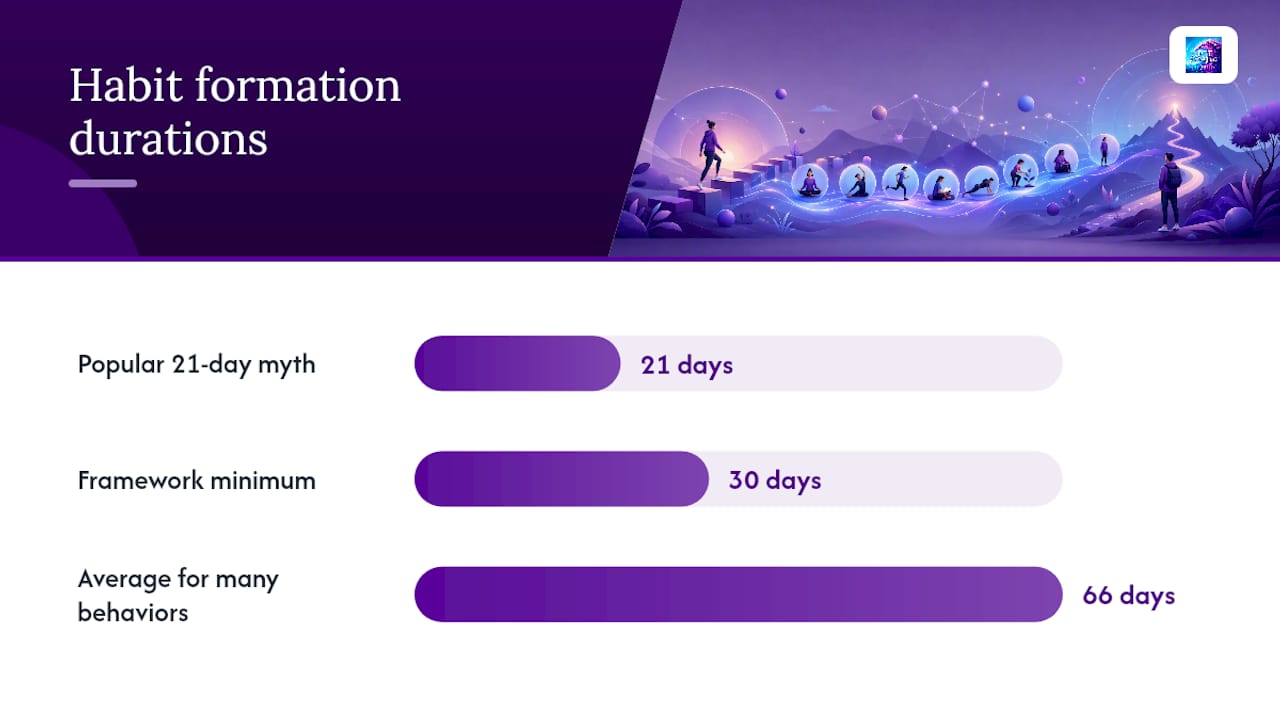
Habit formation does not follow one universal timeline.
The popular claim that a habit becomes automatic after exactly 21, 30, or 66 days oversimplifies the research.
The time required can vary depending on the behavior, individual, context, and opportunities for repetition.
A systematic review of health-related habit formation published in 2024 examined evidence from multiple intervention studies and found substantial variability in the time required for behaviors to become more automatic.
An earlier study also examined how repeated behaviors developed greater automaticity over time:
How Are Habits Formed? Modelling Habit Formation in the Real World
These findings provide useful information about habit development, but they should not be treated as a fixed schedule for achieving personal, academic, or professional goals.
A More Practical Habit-Building Approach
Choose one action.
Connect it with a realistic time or existing routine.
Repeat it when circumstances allow.
Notice what makes the action easier or harder.
Adjust the routine when necessary.
Rather than asking:
“Has my habit become automatic after 30 days?”
ask:
“Is this behavior becoming easier to include in my everyday life?”
That question keeps your attention on a practical outcome.piece designed for exactly this purpose.
A Simple 4-Week Success Habits Starter Plan
This plan offers a manageable way to begin. It is not a promise that four weeks will permanently establish a habit.
| Week | Focus | Practical Action | PTT Music Pairing |
|---|---|---|---|
| Week 1 | Choose | Identify one priority and define a small daily action. | “Choose It” |
| Week 2 | Prepare | Connect the action with an existing routine. | “Get Set” |
| Week 3 | Practice | Continue the action and adjust the routine when needed. | “Every Day” |
| Week 4 | Review | Look at your progress and decide what to continue. | “On My Way” |
Do not feel obligated to add a new habit every week.
You may prefer to spend the entire month working on one practice.
The objective is to create a useful routine, not to complete a challenge at the expense of other responsibilities.
Common Mistakes When Building Daily Habits
Trying to Change Everything at Once
Attempting several major changes simultaneously may make a routine difficult to manage.
Consider beginning with one or two actions that fit your current priorities.
Choosing an Unrealistic Schedule
A routine that requires more time than you consistently have may need adjustment.
Instead of copying someone else’s timetable, choose a schedule that fits your responsibilities.
Treating a Missed Day as Failure
One missed day does not erase previous progress.
Review what happened and decide when to continue.
Making the Goal Too Vague
Instead of:
“Become more productive.”
try:
“Work on my main project for ten minutes after breakfast.”
The second version gives you a clearer action.
Ignoring Rest and Other Responsibilities
A routine that consistently interferes with sleep, family obligations, or necessary recovery may not be sustainable.
Success habits should support your life rather than require you to neglect important parts of it.
How to Create a Routine That Fits Your Life
There is no need to organize your entire day around productivity.
Choose a few activities that support your priorities.
Morning: Prepare
Identify your main task.
PTT Music pairing:
“Get Set”
During the Day: Focus
Set aside time for one meaningful activity.
PTT Music pairing:
“No Distractions”
During a Break: Step Away
Take a break appropriate for your situation.
PTT Music pairing:
“Chillin’”
Evening: Reflect
Review what happened and identify the next step.
PTT Music pairing:
“Now I Know”
Weekly: Continue
Consider what deserves your attention next.
PTT Music pairing:
“Keep It Movin’”
This creates a simple daily framework:
Prepare → Focus → Take Action → Rest → Reflect → Continue
The routine can be adapted to different schedules, including those of students, parents, employees, entrepreneurs, and creative professionals.
What Music Can and Cannot Do for Habit Formation
Music can be an enjoyable part of a daily routine.
However, it is important to avoid claims such as:
“This song will rewire your brain for success.”
“A short track automatically increases productivity.”
“Music creates a conditioned focus response after 30 days.”
“A playlist reduces stress and makes habits permanent.”
These statements promise psychological or physiological effects that should not be assumed.
Instead, a familiar song can serve a simpler purpose.
It may:
-
mark the beginning of a work session;
-
accompany preparation;
-
provide a theme for reflection;
-
make a familiar routine more enjoyable;
-
remind you of a goal;
-
accompany a break or transition.
Different people may prefer different listening conditions.
Some enjoy music while preparing for a task but prefer silence during focused work.
Others enjoy familiar background music throughout the session.
Choose the listening environment that fits you and the task.
PTT Music does not need to create motivation or discipline for you.
It can simply accompany the moments when you choose to practice them.
A PTT Music Playlist for Daily Success Habits
The following PTT Music tracks naturally fit different stages of personal growth and goal pursuit.
| PTT Music Song | Habit Theme | Suggested Use |
|---|---|---|
| “Choose It” | Priorities | Decide what matters today. |
| “Get Set” | Preparation | Prepare your materials and workspace. |
| “The Time Is Now” | Action | Begin the task you have planned. |
| “All In” | Commitment | Give a meaningful task your attention. |
| “No Distractions” | Focus | Reduce unnecessary interruptions. |
| “Steps” | Progress | Break a larger goal into smaller actions. |
| “Every Day” | Consistency | Return to your chosen routine. |
| “Keep It Movin’” | Momentum | Continue after a difficult or interrupted day. |
| “Now I Know” | Reflection | Consider what you learned. |
| “On My Way” | Direction | Recognize progress toward your goal. |
How to Use PTT Music as Part of Your Routine
You do not need a different playlist for every habit.
Start with one or two tracks that naturally fit what you are trying to do.
Before Your First Task
Play:
“Get Set”
Use the time to prepare your materials and identify your next action.
Before Focused Work
Play:
“No Distractions”
Then begin your planned work block.
If music competes with the task, switch to silence or another listening environment.
After Completing a Small Milestone
Play:
“Steps”
Take a moment to recognize the progress you made and identify what comes next.
At the End of the Day
Play:
“Now I Know”
Ask:
“What did I learn today?”
When Returning After a Missed Day
Play:
“Keep It Movin’”
Then restart with a manageable action.
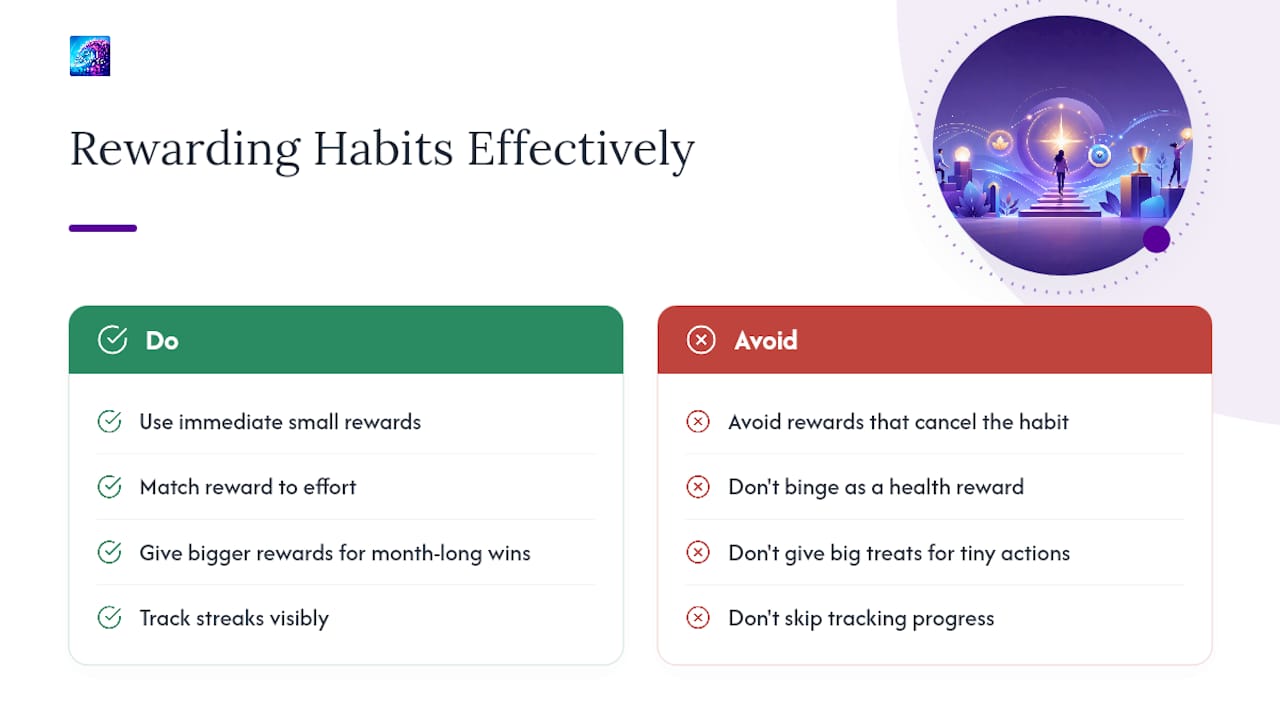
The practical PTT Music framework is:
Choose → Prepare → Begin → Focus → Take Steps → Reflect → Continue
Frequently Asked Questions
What are the best daily habits for success?
Useful habits depend on your goals and circumstances.
Examples include identifying priorities, preparing for the day, focused work, learning, rest, manageable movement, specific action planning, and reviewing progress.
No single routine guarantees success.
Do I need to wake up at 4 a.m. to be successful?
No. An extremely early wake-up time is not a requirement for personal, academic, or professional success.
Choose a routine that fits your responsibilities and allows sufficient time for rest.
How long does it take to build a new habit?
Habit formation varies considerably.
Research does not establish a universal number of days after which every habit becomes automatic.
Focus on making the behavior practical and repeatable rather than meeting an arbitrary deadline.
What are implementation intentions?
Implementation intentions are specific plans that connect a situation with an action.
For example:
“If I finish breakfast, then I will review my priorities.”
This approach can help translate an intention into a clearer plan.
What are the seven habits of highly effective people?
The 7 Habits of Highly Effective People is a specific framework developed by Stephen R. Covey.
Its seven habits are: Be Proactive; Begin With the End in Mind; Put First Things First; Think Win-Win; Seek First to Understand, Then to Be Understood; Synergize; and Sharpen the Saw.
These should not be confused with the ten practical habits presented in this article.
Can music help me maintain a daily routine?
Music can be part of a personal routine.
A familiar track may provide an enjoyable way to mark preparation, reflection, or the start of an activity, but it should not be treated as a guaranteed method for improving productivity or forming habits.
Which PTT Music songs fit daily success habits?
Consider “Choose It,” “Get Set,” “The Time Is Now,” “All In,” “No Distractions,” “Steps,” “Every Day,” “Keep It Movin’,” “Now I Know,” and “On My Way.”

Build Your Own Success Routine With PTT Music
Success does not require a perfect schedule or an extraordinary morning ritual.
It may begin when you:
“Choose It.”
Then:
“Get Set.”
Remember:
“The Time Is Now.”
Go:
“All In.”
Remove:
“No Distractions.”
Take:
“Steps.”
Return:
“Every Day.”
When your routine gets interrupted:
“Keep It Movin’.”
Reflect until:
“Now I Know.”
And recognize:
“On My Way.”
Your habits do not need to look impressive to someone else.
They need to be meaningful, practical, and appropriate for the life you want to build.
Start with one priority. Choose one manageable action. Create a routine that fits your day.
Then continue learning and adjusting as you go.
Explore the PTT Music catalog, choose a soundtrack for your daily routine, and let PTT Music accompany your next meaningful step.
Visit the PTT Music home page to discover more original music and PTT Music content.
Explore the PTT Music Podcast for additional conversations and content about motivation, personal growth, resilience, and purpose.
Read more lifestyle, productivity, and personal-growth articles through the PTT Music Blog.
You can also browse the PTT Music Store and PTT Music Song & Merchandise Collections.